
28 Apr What to Do When If AC Stopped Working in San Antonio
When your AC stops working in San Antonio — especially in the middle of a 100-degree afternoon — the instinct is to panic and grab the phone. That’s understandable. But before you call for service, there are several things you can check yourself that might get your system running again without a service call, or at minimum help you give a technician a clearer picture of what’s happening when they arrive. This guide walks you through a step-by-step process for diagnosing a non-functioning AC, explains the most likely culprits at each stage, and tells you when it’s time to stop troubleshooting and call in a professional. In San Antonio’s climate, a broken AC isn’t a minor inconvenience — it’s a health and safety issue — so this is one situation where a clear action plan matters.
Step 1: Check the Thermostat First
Before anything else, check your thermostat. It sounds obvious, but a surprising number of service calls turn out to be thermostat-related issues that could have been resolved in two minutes.
What to Check
- Make sure the system is set to COOL, not HEAT or OFF
- Confirm the set temperature is lower than the current room temperature — the system won’t kick on if the thermostat is set above where the room already is
- Check that the fan is set to AUTO, not ON — when set to ON, the fan runs continuously even when the system isn’t cooling, which can feel like the AC is broken when it isn’t
- If you have a battery-powered thermostat, replace the batteries — low battery is a common cause of erratic or unresponsive thermostat behavior
- If your thermostat has a blank or dim screen, try pressing a button or replacing batteries before assuming it’s failed
If the thermostat settings look correct and the system still isn’t responding, move on to the next step.
Step 2: Check the Circuit Breaker
AC systems draw a significant amount of power, and a tripped breaker is one of the most common reasons a unit stops working — especially after a power surge or storm, both of which San Antonio sees regularly.
What to Do
- Go to your electrical panel and look for breakers labeled AC, Air Handler, Condenser, or HVAC — some systems have two separate breakers, one for the indoor air handler and one for the outdoor unit
- A tripped breaker will be in the middle position — not fully on, not fully off. Reset it by switching it fully to OFF first, then back to ON
- If the breaker trips again immediately or shortly after resetting, do not keep resetting it. A breaker that keeps tripping is indicating an electrical problem in the system — continuing to reset it can cause further damage or create a fire risk. Call a technician.
It’s also worth checking the disconnect box mounted on the wall near your outdoor condenser unit. This is a secondary shutoff, and occasionally the disconnect pull-out gets dislodged or the fuses inside blow. If you’re comfortable checking it, pull the disconnect out and look at the fuses — a blown fuse will often show visible darkening or a broken wire inside the glass. Replacing fuses is straightforward, but only do this if you’re comfortable working around electrical components.
Step 3: Check the Air Filter
A severely clogged air filter can restrict airflow to the point where the evaporator coil freezes over, which causes the system to stop cooling or shut down entirely. This is one of the more overlooked causes of AC failure in San Antonio, where systems run so heavily that filters can get loaded up faster than homeowners expect.
What to Do
- Locate your filter — it’s typically in the return air grille on a wall or ceiling, or inside the air handler unit itself
- Pull the filter and hold it up to the light. If you can’t see light through it, it needs to be replaced
- Replace with the correct size filter and a MERV rating appropriate for your system — generally MERV 8 to 11 works well for most residential systems in San Antonio
- If the filter was extremely clogged, check the evaporator coil (the component just behind the filter) for ice. A frozen coil will look like a block of ice on the copper lines or coil face. If it’s frozen, turn the system off and set the fan to ON to let the ice melt before restarting — this can take 2 to 4 hours
Per guidance from the U.S. Department of Energy, replacing a clogged filter is one of the most impactful single maintenance steps a homeowner can take — it directly affects both system performance and efficiency. During peak San Antonio summer months, checking your filter monthly is a reasonable habit.
Step 4: Check the Condensate Drain Line
San Antonio’s high humidity means your AC system is pulling a lot of moisture out of the air and routing it out through the condensate drain line. When that line clogs — which happens when algae, mold, or debris build up inside it — most modern systems have a float switch that will shut the system down automatically to prevent water damage.
Signs of a Clogged Drain Line
- The system shuts off but everything else seems fine — no tripped breakers, clean filter, correct thermostat settings
- You notice water in the drain pan under the air handler
- You see water dripping from the unit or staining on the ceiling near the air handler
What to Do
- Locate the drain line access point — typically a white PVC pipe with a cap near the air handler
- Remove the cap and pour a mixture of 1 cup white vinegar and 1 cup water into the line — this can break up minor algae buildup
- Use a wet-dry vacuum on the exterior drain line outlet (usually draining outside near the condenser) to suction out the clog
- If you can’t clear the line or aren’t sure where it drains, call a technician — a persistently clogged line that causes overflow can lead to water damage inside the air handler and the surrounding structure
Step 5: Check the Outdoor Condenser Unit
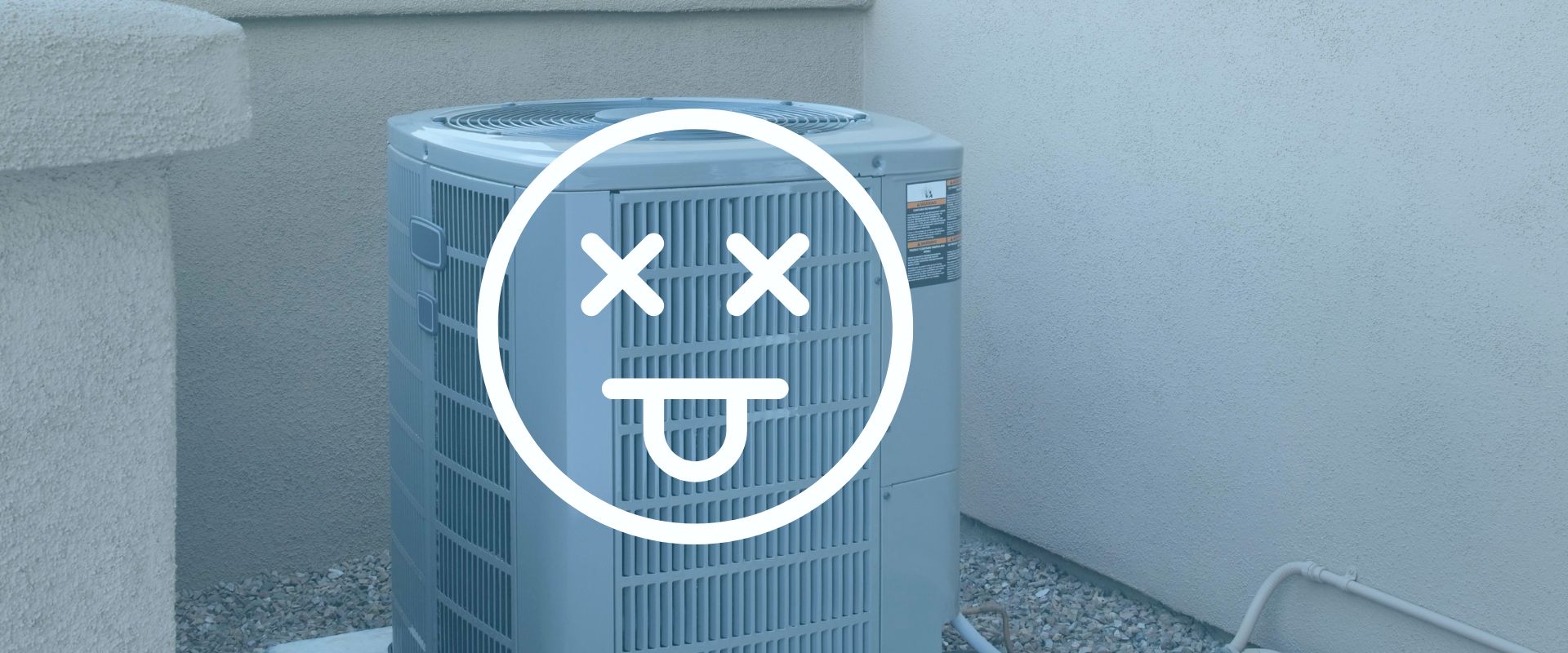
Go outside and look at your condenser unit — the large box-shaped unit typically sitting on a concrete pad next to your home. There are a few things to check here before calling for service.
What to Look For
- Is the unit running at all? If it’s completely silent and still when the thermostat is calling for cooling, check the breaker and the disconnect again
- Is the fan spinning? If the unit is humming but the fan blade on top is not spinning, the condenser fan motor or capacitor has likely failed — this requires a technician
- Is the unit iced over? Ice on the refrigerant lines or the unit itself usually indicates low refrigerant or a restricted airflow problem — turn the system off and call for service
- Is there debris blocking the unit? Leaves, grass clippings, or overgrown vegetation blocking the sides of the condenser restrict airflow and reduce cooling capacity. Clear at least 2 feet of clearance on all sides and make sure the top of the unit is unobstructed
- Is the unit making unusual sounds? Grinding, banging, or screeching sounds indicate mechanical failure inside the unit — turn it off to avoid further damage and call a technician
If the outdoor unit is running and the fan is spinning but the air coming from your vents is warm or only slightly cool, the system is operating but not cooling effectively. This typically points to a refrigerant issue, a dirty evaporator coil, or a failing compressor — all of which require professional diagnosis.
Step 6: Know When to Stop and Call a Professional
The steps above cover the most common DIY-addressable causes of AC failure. If you’ve worked through all of them and the system still isn’t cooling, it’s time to call a professional. Continuing to run a system that isn’t working correctly — or repeatedly resetting breakers that keep tripping — can cause additional damage that makes an already costly repair more expensive.
You should call a technician immediately — without working through the steps above — if:
- You smell burning or electrical odors coming from the unit or vents
- You hear loud banging, grinding, or screeching from the system
- You see sparks or visible damage to electrical components
- The circuit breaker trips repeatedly after resetting
- There is significant water leaking from the air handler into living spaces
These are not wait-and-see situations. An AC system that’s showing these signs needs to be shut off and assessed by a licensed technician before being restarted.
What to Tell the Technician When You Call
When you call for service, having a few pieces of information ready helps the dispatcher and technician prepare and often speeds up the repair.
- The brand and approximate age of your system, if you know it
- What symptoms you’re seeing — the system won’t turn on, it runs but doesn’t cool, it’s making a specific noise, etc.
- What steps you’ve already checked — thermostat, breaker, filter, outdoor unit
- Whether the system has had any recent service or repairs
- Whether anyone in the household has medical conditions that make extreme heat a serious concern — most reputable companies prioritize emergency calls accordingly
How to Stay Safe Until Your AC Is Repaired
In San Antonio’s summer heat, a home without AC can become dangerously hot within hours — particularly for young children, elderly family members, or anyone with a heart or respiratory condition. The City of San Antonio’s Metropolitan Health District activates cooling centers during heat emergencies, and the National Weather Service San Antonio issues heat advisories when conditions become hazardous.
While waiting for repair, take these steps to keep your household safer:
- Close blinds and curtains on south- and west-facing windows during the hottest part of the day — direct sunlight through windows significantly increases indoor temperature
- Use portable or ceiling fans to improve air circulation — fans don’t lower temperature, but they make the air feel several degrees cooler by improving evaporative cooling on skin
- Stay hydrated and limit strenuous activity during peak heat hours (typically 2 PM to 6 PM)
- If the home becomes unsafe — particularly above 90°F indoors — relocate vulnerable family members to a cooled environment: a neighbor’s home, a library, a shopping center, or one of the city’s designated cooling centers
- Unplug heat-generating appliances like ovens, dryers, and desktop computers if possible — they contribute to indoor heat load
Preventive Steps to Avoid Future Breakdowns
The best time to find out your AC isn’t working is not in July. Most mid-summer breakdowns are the result of deferred maintenance — issues that were developing for weeks or months and finally crossed a threshold when the system was pushed hardest. A spring tune-up from a qualified technician catches developing problems before they become failures.
Annual AC maintenance at Gabe’s includes a full system inspection, coil cleaning, refrigerant level check, electrical component testing, drain line flushing, and a thermostat calibration — everything that catches the most common causes of mid-season failure before they happen. The Air Conditioning Contractors of America recommends professional maintenance once a year for central air systems operating in climates with extended cooling seasons — which San Antonio absolutely qualifies as.
Beyond professional service, the habits that matter most are simple: change your filter regularly, keep the area around your outdoor unit clear, and don’t ignore early warning signs like longer-than-usual cooling times, unusual sounds, or unexplained increases in your energy bill.
Serving San Antonio Homeowners When It Matters Most
Gabe’s Priority AC Service provides repair service across San Antonio and the surrounding communities, including Alamo Heights, Castle Hills, Shavano Park, Alamo Ranch, Helotes, Leon Valley, Von Ormy, and Macdona. We know that a broken AC in this climate isn’t something that can wait, and we work to get to our customers as quickly as possible.
Every repair comes with honest diagnostics, upfront pricing, and no-surprise invoices. And every new installation is backed by our 365-Day, No-Risk Guarantee. If you’re going through the steps above right now and your system still isn’t cooling, contact us and let’s get it sorted out.
Frequently Asked Questions: AC Stopped Working in San Antonio
Why did my AC suddenly stop working?
The most common causes of a sudden AC shutdown are a tripped circuit breaker, a clogged condensate drain line triggering the float switch, a failed capacitor, or a thermostat issue. Work through the steps in this guide before calling for service — many of these causes can be identified and sometimes resolved without a technician.
My AC is running but not cooling — what’s wrong?
A system that runs but doesn’t cool is usually dealing with a refrigerant issue, a dirty evaporator coil, a clogged filter restricting airflow, or a failing compressor. Check your filter first — it’s the easiest fix. If the filter is clean and the system is still blowing warm or barely cool air, you need a professional diagnosis.
How long can a house get dangerously hot without AC in San Antonio?
In San Antonio’s summer heat, an unshaded home can climb to dangerous temperatures within a few hours of the AC failing, particularly during triple-digit days. Indoor temperatures above 90°F are dangerous for vulnerable individuals. If you can’t get same-day service, relocate family members who may be at elevated risk to a cooled environment.
Should I turn my AC off if it’s blowing warm air?
If the system is blowing warm air but running normally otherwise, you can leave it running on fan-only mode to circulate air while you wait for service — though this won’t cool the home. If the outdoor unit is iced over, turn the system off entirely and let it thaw before restarting. Running a frozen system can damage the compressor.
What do I do if my AC breaker keeps tripping?
Reset the breaker once. If it trips again immediately or within a short period, do not keep resetting it. A repeatedly tripping breaker is a sign of an electrical fault, an overloaded circuit, or a component drawing too much current — all of which require a licensed technician to diagnose safely.
Can I run my AC with a clogged filter?
Running your system with a severely clogged filter risks freezing the evaporator coil, overworking the blower motor, and reducing cooling capacity significantly. Replace the filter before running the system, and if the coil has frozen, turn the system off and allow it to thaw completely before restarting.
My AC makes a loud noise when it starts — is that normal?
A brief clicking sound when the system starts is normal. Loud banging, grinding, screeching, or rattling sounds when starting or during operation are not. These noises typically indicate a mechanical issue — a loose component, a failing motor, or compressor problems — and the system should be shut off and inspected before continuing to run it.
How do I know if my AC is frozen?
Signs of a frozen AC include ice visible on the refrigerant lines or the outdoor unit, reduced or no airflow from vents, and warm air blowing despite the system running. If you suspect a frozen coil, turn the system off at the thermostat and set the fan to ON — this runs the blower without the cooling cycle and helps melt the ice. Do not attempt to chip or scrape the ice off the coil.
Will my AC work if the outdoor unit is dirty?
A dirty condenser coil restricts the system’s ability to release heat, which reduces cooling capacity and forces the compressor to work harder. Over time, a heavily fouled condenser coil can lead to system overheating and shutdown. Annual maintenance that includes condenser coil cleaning is one of the most effective ways to prevent this.
How quickly can Gabe’s Priority AC Service respond to an emergency?
We do our best to respond to AC emergencies as quickly as possible, with same-day service available in most cases. Response times during peak summer months can vary based on call volume, but we prioritize households with medical vulnerabilities and make every effort to keep customers informed on estimated arrival times.
Don’t Wait Out the Heat — Get It Fixed
If you’ve worked through every step in this guide and your AC is still not cooling, the next step is a professional diagnosis. Gabe’s Priority AC Service has been helping San Antonio homeowners get their systems back up and running with honest, reliable service and transparent pricing. Give us a call or schedule your appointment online — we’ll get there as fast as we can and get your home comfortable again.