
30 Jul What Happens During an AC Tune-Up in San Antonio? A Step-by-Step Breakdown
If you’ve ever scheduled an AC tune-up in San Antonio and wondered exactly what the technician is doing for that hour — or whether it’s actually worth doing at all — this guide is for you. An AC tune-up is one of those services that gets recommended everywhere but rarely explained in detail. Here’s what a thorough tune-up actually involves, why each step matters in San Antonio’s specific climate, and what you should expect before, during, and after the visit. Understanding the process makes it easier to ask the right questions, recognize quality work, and get the most out of every maintenance appointment.
Why AC Tune-Ups Matter More in San Antonio Than Most Cities
San Antonio’s climate is genuinely harder on air conditioning equipment than most U.S. markets. Systems here run 16 to 20 hours a day during peak summer months, accumulating thousands of operating hours per season that would take years to reach in cooler climates. That accelerated wear makes annual maintenance not just a best practice — it’s a necessity for keeping the system operating efficiently and catching developing problems before they turn into expensive failures in the middle of a heat wave.
The U.S. Department of Energy estimates that a well-maintained AC system operates 15% to 25% more efficiently than a neglected one. In a city where a household AC bill can run $200 to $300 per month in summer, that efficiency gap is real money — and it compounds every month the system runs below peak performance.
Annual tune-ups are also the most reliable way to extend the lifespan of your AC unit. A system that gets consistent preventive care will outlast a neglected system of identical age and quality in nearly every case.
When Should You Schedule an AC Tune-Up?
Early spring — ideally March or April — is the best time for a San Antonio tune-up. Scheduling before the summer heat arrives accomplishes two things: the system is inspected and ready before it’s needed most, and you avoid the surge in demand that fills technicians’ schedules from May onward. Trying to schedule a tune-up in June or July in San Antonio often means waiting days or longer, because everyone else had the same idea at the same time.
If you missed the spring window, scheduling a tune-up mid-summer is still worthwhile — it can catch problems that have developed during heavy use and prevent a mid-season breakdown. A fall tune-up is also valuable for homeowners who use a heat pump, preparing the system for the heating season.
Step-by-Step: What a Thorough AC Tune-Up Includes
Step 1: System Overview and Visual Inspection
A good technician starts with a walkthrough of both the indoor and outdoor units before touching anything. This initial inspection looks for obvious signs of trouble: physical damage to the unit, deteriorating insulation on refrigerant lines, signs of water damage or rust around the air handler, vegetation encroaching on the condenser, and any visible evidence of recent problems like burn marks on electrical components or ice accumulation on the coil.
This step also establishes a baseline for the rest of the visit. A technician who skips the visual overview and goes straight to checking boxes is cutting corners that matter.
Step 2: Thermostat Calibration and Testing
The thermostat controls everything — if it’s reading temperature inaccurately or communicating incorrectly with the system, the entire unit performs below potential. The technician verifies that the thermostat reads the correct indoor temperature, responds properly when the cooling mode is activated, and that the system turns on and off at the correct setpoints.
If you have an older manual thermostat, this is also a good moment to discuss whether a programmable or smart thermostat upgrade makes sense. In San Antonio, where precise temperature management over long daily runtime hours can meaningfully reduce energy costs, the upgrade often pays for itself within a season. CPS Energy offers rebates on qualifying smart thermostats that can reduce the upfront cost.
Step 3: Air Filter Inspection and Replacement
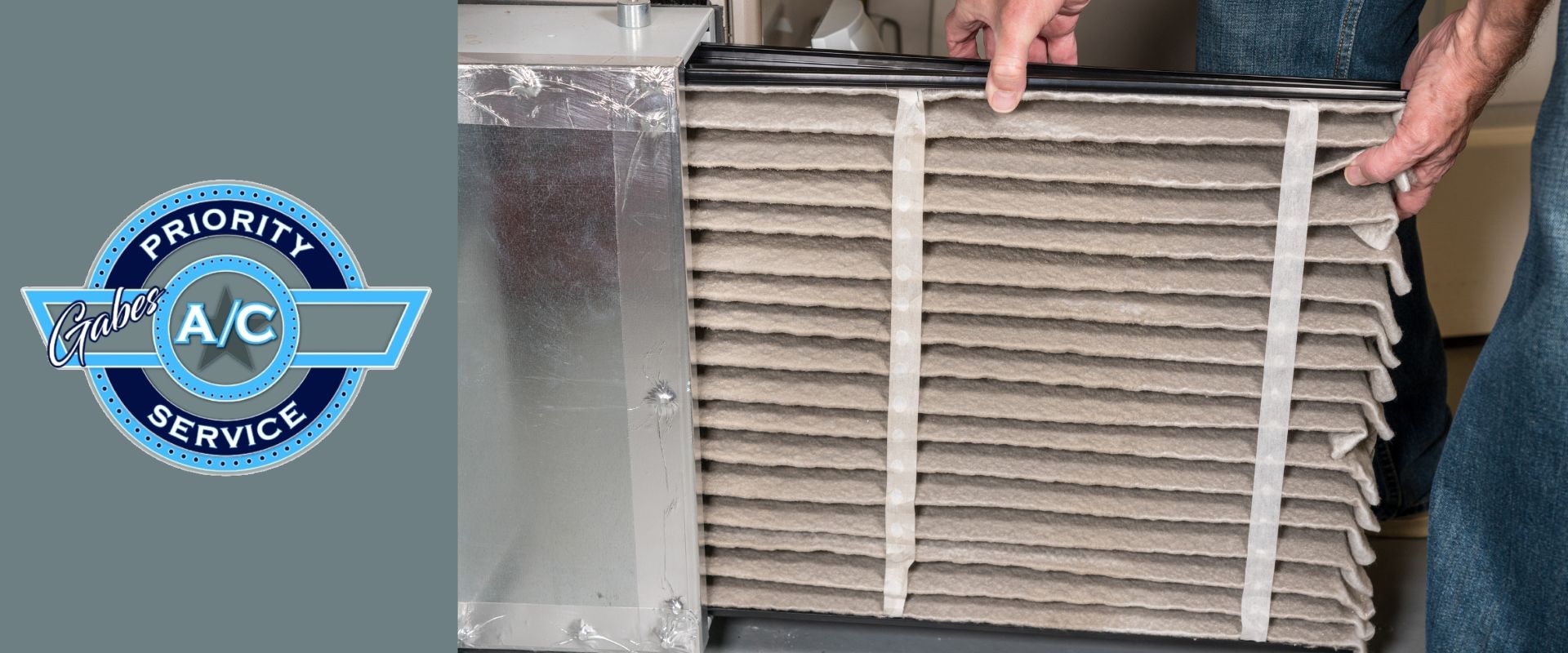
The air filter is the first line of defense for your system’s internal components, and it’s the single most impactful DIY maintenance task a homeowner can perform between professional visits. During a tune-up, the technician inspects the current filter and replaces it if needed — or advises on the correct replacement type if the homeowner prefers to handle it.
In San Antonio, where dust, pollen, and cottonwood seeds are a near-constant presence and systems run almost continuously during summer, filters need to be checked monthly and replaced every one to two months during peak season. A severely clogged filter restricts airflow enough to freeze the evaporator coil and force the blower motor to work against significant resistance — both of which accelerate wear and reduce efficiency. If you’re not sure how often to change your AC filter, the answer in this climate is more frequently than most filter packaging suggests.
Step 4: Evaporator Coil Cleaning and Inspection
The evaporator coil sits inside the air handler and is responsible for absorbing heat from the air circulating through your home. Over time, dust and debris accumulate on the coil’s surface — even with regular filter changes — reducing its ability to transfer heat efficiently. A dirty evaporator coil forces the system to run longer to achieve the same cooling and can eventually lead to coil freeze-up if airflow is sufficiently restricted.
The technician inspects the coil for buildup, cleans it as needed, and checks for any signs of corrosion or physical damage. In San Antonio’s humid climate, evaporator coils are also prone to microbial growth — mold and algae that can contribute to indoor air quality issues and accelerate coil degradation. Indoor air quality is directly affected by the condition of the evaporator coil, which is part of why coil cleaning is a meaningful maintenance step rather than just a performance one.
Step 5: Condenser Coil Cleaning and Inspection
The condenser coil is in the outdoor unit and does the opposite job of the evaporator coil — it releases heat from the refrigerant into the outside air. Because it’s exposed to the environment year-round, it collects dirt, grass clippings, cottonwood seeds, and other debris that coat the fins and reduce the coil’s ability to dissipate heat.
A dirty condenser coil is one of the most common efficiency killers on San Antonio systems. The technician cleans the coil using a coil cleaner and gentle rinsing, inspects the fins for bending or damage (bent fins can be straightened with a fin comb), and checks for signs of refrigerant leaks around the coil connections. A condenser coil in poor condition can reduce system efficiency by 10% to 30% — the equivalent of running an aging, inefficient system instead of the one you paid for.
Step 6: Refrigerant Level Check
Refrigerant is what makes cooling possible — it absorbs heat from indoor air and carries it to the outdoor unit to be released. A system that’s low on refrigerant loses cooling capacity and forces the compressor to work harder to compensate, which stresses the most expensive component in the system.
The technician checks refrigerant pressure using manifold gauges and compares readings against the manufacturer’s specifications for the system. If the system is low, the more important question is why — refrigerant doesn’t simply run out. A low charge almost always indicates a leak somewhere in the system that needs to be found and repaired before recharging makes sense. As covered in the post on AC repair costs in San Antonio, refrigerant recharges without addressing the underlying leak are a temporary fix that leaves the problem in place.
Step 7: Electrical Component Inspection and Testing
This is one of the most important steps in the tune-up and one that homeowners can’t perform themselves. The technician inspects and tests the key electrical components that make the system start and run:
- Capacitors — these store and release electrical charge to start and run the compressor and fan motors. They degrade over time and are among the most commonly replaced components in San Antonio systems. A capacitor that tests within 10% to 15% of its rated value during a tune-up is a capacitor that should be proactively replaced before it fails mid-summer
- Contactor — this is the electrical switch that controls power flow to the compressor and condenser fan. Contactors develop pitting and burning on their contact points over time, particularly after electrical surges from San Antonio’s storm season
- Wiring and connections — loose or corroded connections create resistance that wastes energy and generates heat, which can damage surrounding components. The technician tightens connections and looks for any signs of heat damage or deterioration
- Disconnect box — the technician checks the outdoor disconnect for proper fuse ratings and signs of arcing or overheating
Step 8: Blower Motor and Belt Inspection
The blower motor moves air through the system continuously during operation. The technician checks the motor’s amperage draw against its rated specifications — a motor pulling more current than it should is a motor working harder than it should, typically due to a mechanical problem or restricted airflow. On older systems with belt-driven blowers, the belt is inspected for wear and tension.
The blower wheel itself is also inspected and cleaned if needed. A dirty blower wheel — coated in dust and debris — is unbalanced and less effective at moving air, both of which reduce system efficiency and add stress to the motor.
Step 9: Condensate Drain Line Flush
The condensate drain line routes moisture removed from the air by the evaporator coil out of the system — typically draining outside near the condenser or into a floor drain. In San Antonio’s humidity, this line handles significant moisture volume during the cooling season, and algae and debris accumulate inside it over time.
A clogged condensate drain is one of the most common reasons AC systems shut down unexpectedly in summer. Most modern systems have a float switch that triggers a shutdown when the drain pan fills up — a safety feature to prevent water damage, but one that leaves you without cooling until the line is cleared. Flushing the drain line during a tune-up takes this risk off the table for the season ahead.
Step 10: System Performance Test
After completing all the individual checks and cleaning steps, the technician runs the system through a full operating cycle and measures overall performance. Key measurements include:
- Supply and return air temperature differential — a properly functioning system should produce a temperature split of 16°F to 22°F between return air and supply air. A split outside this range indicates an efficiency problem somewhere in the system
- Airflow from supply vents — strong, consistent airflow across all registers confirms the blower and duct system are functioning correctly
- System cycling behavior — the technician observes how the system starts, runs, and shuts off to confirm proper operation
This final performance check is what separates a thorough tune-up from a box-checking exercise. It confirms that everything done during the visit has translated into the system actually performing the way it should.
What the Technician Should Tell You After a Tune-Up
At the end of a professional tune-up, you should receive a clear verbal summary — and ideally written documentation — of everything that was checked, what condition each component was found in, and any recommendations for repair or replacement. Reputable companies don’t bury findings or pressure you to approve additional work on the spot. They tell you what they found, explain why it matters, and let you make an informed decision.
If a technician completes a tune-up and leaves without telling you anything specific about the condition of your system, that’s worth following up on. Knowing your system’s current state — particularly the condition of capacitors, refrigerant levels, and coil cleanliness — is part of the value you’re paying for.
How Often Should San Antonio Homeowners Schedule a Tune-Up?
Once a year is the standard recommendation for central AC systems, and in San Antonio’s climate, that minimum is well-justified. Homeowners with heat pumps — which run year-round for both heating and cooling — benefit from twice-yearly service, once in spring and once in fall, to keep both the cooling and heating cycles in top condition.
If your system is older than 10 years or has a history of reliability issues, more frequent check-ins make sense. The AC repair calls that seem to come out of nowhere are almost always traceable to a developing problem that annual maintenance would have caught months earlier.
Serving San Antonio Homeowners Before and During Summer
Gabe’s Priority AC Service provides thorough, transparent tune-ups across San Antonio and surrounding communities. Whether you’re in Alamo Heights, Alamo Ranch, Helotes, Castle Hills, Leon Valley, Shavano Park, Von Ormy, or Macdona, you’ll get the same step-by-step service, honest findings, and no-pressure recommendations that our customers have come to count on.
Every tune-up includes a full system report, and if anything we find warrants a repair, we’ll explain exactly what it is and what it costs before we touch it. Schedule your tune-up online or give us a call — the earlier in the season, the better.
Frequently Asked Questions: AC Tune-Ups in San Antonio
What is included in an AC tune-up?
A thorough AC tune-up includes thermostat calibration, air filter inspection and replacement, evaporator and condenser coil cleaning, refrigerant level check, electrical component testing (capacitors, contactor, wiring), blower motor inspection, condensate drain line flush, and a final system performance test measuring temperature differential and airflow. The full process typically takes 60 to 90 minutes on a standard residential system.
How much does an AC tune-up cost in San Antonio?
AC tune-up pricing in San Antonio generally runs between $75 and $150 for a standard residential service. Pricing varies based on the scope of service included and whether any components need replacement during the visit. Be cautious of extremely low promotional pricing — some companies use a discounted tune-up as an entry point to recommend unnecessary repairs once inside the home. Ask upfront what the tune-up includes and what the policy is on recommended add-ons.
How long does an AC tune-up take?
A thorough tune-up on a standard single-system home typically takes 60 to 90 minutes. Larger homes with multiple systems, or systems that require more extensive cleaning or have developing issues that need attention, may take longer. If a technician completes a “tune-up” in 20 to 30 minutes, it’s reasonable to ask what was and wasn’t covered.
Is an AC tune-up worth it in San Antonio?
Yes — particularly in San Antonio’s climate. Systems here run far more hours annually than in most U.S. markets, which means maintenance skipped for a year or two translates to significant accumulated wear without inspection. The efficiency gains alone from clean coils and a properly charged system often offset the cost of the tune-up over the course of a summer. Catching a failing capacitor or a developing refrigerant leak during a tune-up costs a fraction of what an emergency repair call costs after a breakdown.
What’s the difference between a tune-up and a full AC service?
The terms are often used interchangeably, but a tune-up typically refers to a preventive maintenance visit focused on inspection, cleaning, and adjustment. A full service may include repairs, parts replacement, and additional diagnostics beyond what’s covered in a standard tune-up. Ask the company you’re calling what’s included in their specific tune-up offering before scheduling.
Should I be home during the AC tune-up?
It’s helpful but not always required. Being present allows the technician to explain their findings directly and gives you the opportunity to ask questions and point out any specific issues you’ve noticed. If you can’t be home, make sure someone is available to grant access to both indoor and outdoor units and that you have a way to receive the technician’s findings — by phone, text, or written report left on site.
What should I do to prepare for an AC tune-up?
Clear at least two feet of clearance around the outdoor condenser unit before the technician arrives. Make sure the indoor air handler is accessible — remove anything stored in front of it. If you know where your filter is, check it before the appointment so you can report how recently it was changed. Having your system’s make, model, and approximate age available is helpful if the technician asks.
Can a tune-up fix my AC if it’s not cooling properly?
A tune-up can resolve some cooling issues — particularly those caused by dirty coils, a clogged filter, or low refrigerant. But a tune-up is a preventive maintenance service, not a repair. If your system has a significant underlying problem — a failed compressor, a refrigerant leak, a burned-out motor — the tune-up will identify the issue and the technician should recommend the appropriate repair. Don’t expect a tune-up to substitute for a diagnostic repair call on a system that’s actively malfunctioning.
How do I know if my AC was properly serviced?
A properly serviced system should show measurable improvement: better airflow, reaching set temperature more efficiently, and quieter operation if the system was straining before. The technician should provide you with specific findings — actual readings from the refrigerant pressure check, a report on capacitor condition, coil cleanliness before and after — not just a verbal “everything looks good.” If no specific findings are shared, ask for them.
Does Gabe’s Priority AC offer maintenance plans?
Yes. Rather than trying to remember to schedule annually, a maintenance agreement ensures your system gets professional attention on a set schedule. Learn more about maintenance service from Gabe’s Priority AC, or contact us to ask about current plan options and pricing.